How to File a DMCA Takedown for a Stolen Photo

Finding your photo on a stranger's website, online store or social media account is frustrating. The good news is that in the United States there is a fast, free way to get it removed in many cases: a DMCA takedown notice. Here's how it works and how to send one.
This article is general information about US law, not legal advice. For a specific case, talk to a copyright attorney.
What is a DMCA takedown?
The Digital Millennium Copyright Act (DMCA) gives online service providers, like web hosts, social networks and marketplaces, a "safe harbor" from liability for what their users post. To keep that protection, they must remove infringing material quickly when the copyright owner sends a proper notice. That is why most US platforms take DMCA notices seriously.
Step 1: Collect evidence
- Take screenshots of the page showing your photo, including the URL and the date.
- Save the direct link to the image file if you can.
- Keep your original file, ideally the full-resolution version with its camera metadata. This shows you are the creator.
Step 2: Find out who to send it to
Don't start with the person who copied your photo unless you want to. The faster route is usually the platform:
- Big platforms (Instagram, Facebook, YouTube, Pinterest, Etsy, eBay, Amazon, Shopify and others) have their own copyright report forms. Search for "[platform name] copyright report."
- Websites: find the hosting company. A WHOIS lookup or a "who is hosting this site" tool will usually tell you. Then look for the host's DMCA or abuse contact.
- Many service providers list a designated agent in the U.S. Copyright Office's DMCA Designated Agent Directory.
Step 3: Write the notice
A valid DMCA notice must include these elements:
- Your physical or electronic signature.
- Identification of your copyrighted work (for example, a link to the original on your website, or a description of the photo).
- Identification of the infringing material and where it is, with the exact URL.
- Your contact information: name, address, phone number and email.
- A statement that you have a good-faith belief the use is not authorized by you, your agent or the law.
- A statement that the information in the notice is accurate and, under penalty of perjury, that you are the owner or authorized to act for the owner.
Keep it factual and short. Platform forms will ask for exactly these items.
Step 4: What happens next
Most platforms act within a few days. The person who posted the image is notified and can file a counter-notice if they believe the removal was a mistake. If they do, the platform may restore the content after 10 to 14 business days unless you file a lawsuit in that time. Only send a notice when you are sure the use is not licensed and not likely to be fair use, because false claims can create liability.
When a takedown isn't enough
A takedown removes the image, but it doesn't pay you. If your photo was used commercially, for example in an ad or on a product, you may want to ask for a license fee or speak to a copyright attorney. Your options are much stronger if the image was registered with the U.S. Copyright Office before the infringement or within three months of publication.
Make the next theft less likely
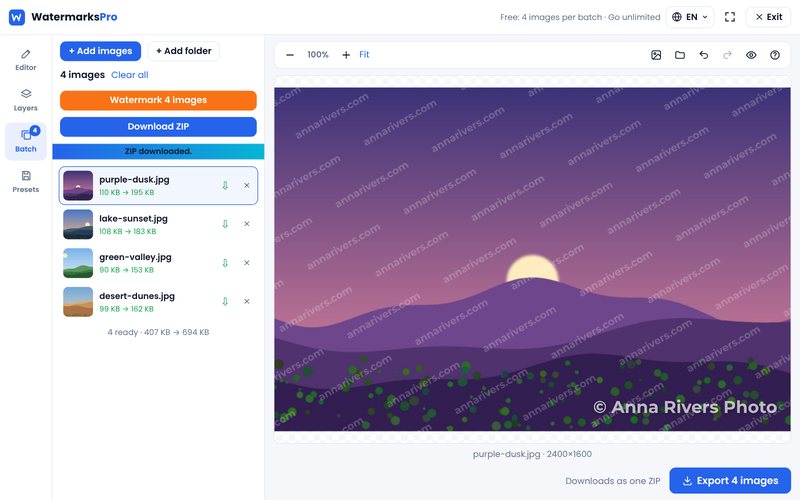
- Watermark with your name and ©. A watermark that includes your name can count as copyright management information under the DMCA, and removing it to hide infringement is a separate violation.
- Place it over the subject, not in a corner where it is easy to crop.
- Post web-sized files only, never the full-resolution original.
- Run reverse image searches on your best photos every few months.
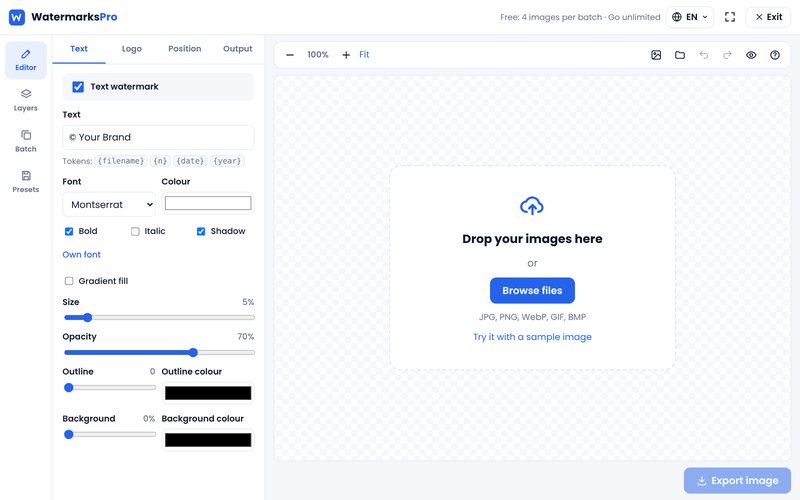
You can watermark a whole folder at once with our free bulk watermark tool. It runs in your browser, so your images stay on your device.